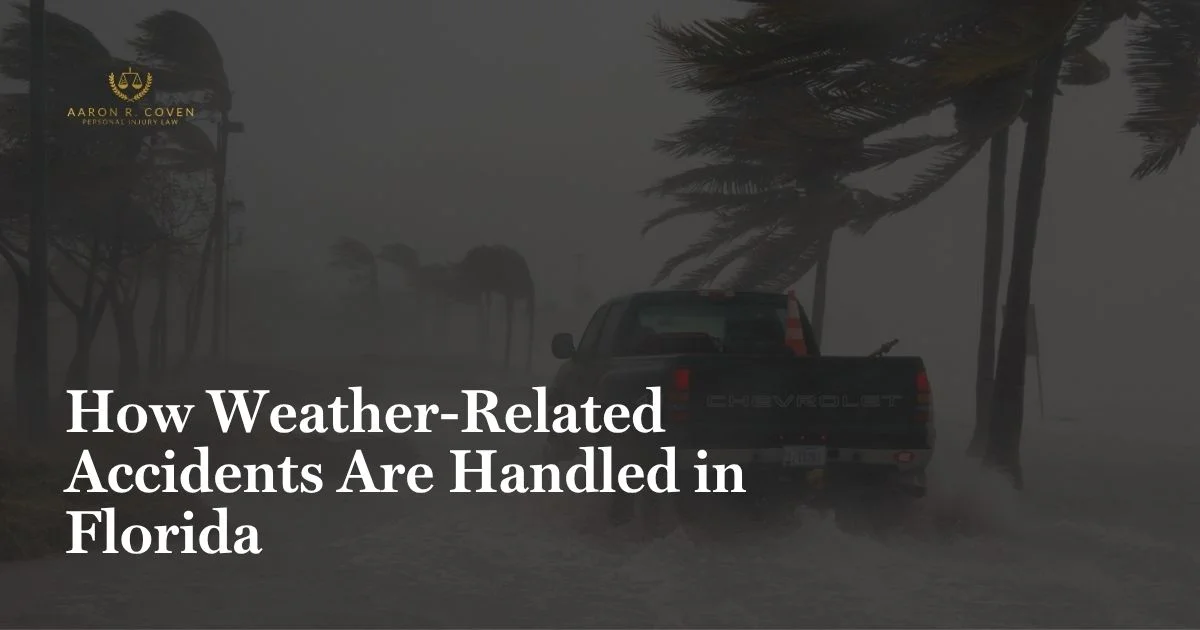
Florida drivers deal with some unpredictable weather.
Heavy rain. Sudden storms. Flooded roads. Fog. High winds. Hurricanes. Afternoon downpours that make visibility disappear almost instantly.
When an accident happens during severe weather, one of the first questions people ask is:
“Who is responsible?”
The answer is not always simple, but weather alone does not automatically prevent someone from being held liable for an accident.
Bad Weather Does Not Eliminate Responsibility
A common misconception is that weather-related crashes are considered “nobody’s fault.”
That is not true.
Drivers still have a legal responsibility to operate their vehicles safely based on road and weather conditions.
That means drivers may still be responsible if they:
Drive too fast in heavy rain
Follow too closely
Fail to use headlights properly
Ignore flooded road warnings
Lose control because they were driving recklessly
Fail to adjust for limited visibility
In Florida, drivers are expected to adapt to the conditions around them.
Rain Is a Major Cause of Florida Accidents
Florida sees a huge number of accidents during rainstorms.
Heavy rain can create:
Hydroplaning
Reduced visibility
Longer stopping distances
Slick roads
Sudden traffic slowdowns
Even experienced drivers can lose control if they are not driving carefully.
Unfortunately, many people continue driving at highway speeds during dangerous weather conditions, especially on roads like I-95 and Florida’s Turnpike.
Insurance Companies Still Investigate Fault
Even when weather plays a role, insurance companies still investigate what actually caused the crash.
They may review:
Police reports
Vehicle damage
Witness statements
Traffic camera footage
Weather conditions
Speed estimates
Driver behavior before the crash
The key question is often whether the driver acted reasonably under the circumstances.
Multi-Car Accidents Can Become Complicated
Weather-related crashes often involve chain reaction accidents.
One driver hydroplanes. Another slams on the brakes. Multiple vehicles become involved within seconds.
These cases can quickly become complicated because multiple insurance companies may argue over:
Who caused the initial collision
Whether drivers reacted appropriately
Comparative fault between parties
The sequence of impacts
Florida’s comparative negligence laws can also affect how compensation is determined if multiple parties share fault.
Commercial Drivers May Be Held to Higher Standards
Commercial vehicles, delivery drivers, and trucking companies often have additional safety obligations during dangerous weather.
In some situations, trucking companies may be criticized for:
Keeping drivers on the road during unsafe conditions
Failing to properly maintain tires or brakes
Encouraging unrealistic delivery schedules
Ignoring safety regulations
Large commercial vehicle accidents during storms can result in severe injuries due to the size and weight of the vehicles involved.
Documentation Matters After a Weather-Related Crash
Evidence becomes extremely important in these cases.
After an accident, it helps to document:
Weather conditions
Road conditions
Standing water
Visibility
Traffic patterns
Vehicle positions
Damage to all vehicles involved
Photos and videos taken at the scene can become valuable later.
Medical documentation is equally important if injuries occurred.
Weather Is a Factor — Not Always an Excuse
Courts and insurance companies understand that Florida weather can be dangerous.
But drivers are still expected to act responsibly.
Sometimes weather truly creates unavoidable conditions. Other times, the accident happens because someone chose to drive too aggressively despite obvious dangers.
Every case depends on the facts.
Final Thoughts
Weather-related accidents in Florida are often more complicated than people realize.
Rain, storms, and poor visibility may contribute to a crash, but that does not automatically remove liability from the driver who caused it.
If you were injured in a weather-related accident, it is important to document everything, seek medical treatment, and understand your legal options as early as possible.