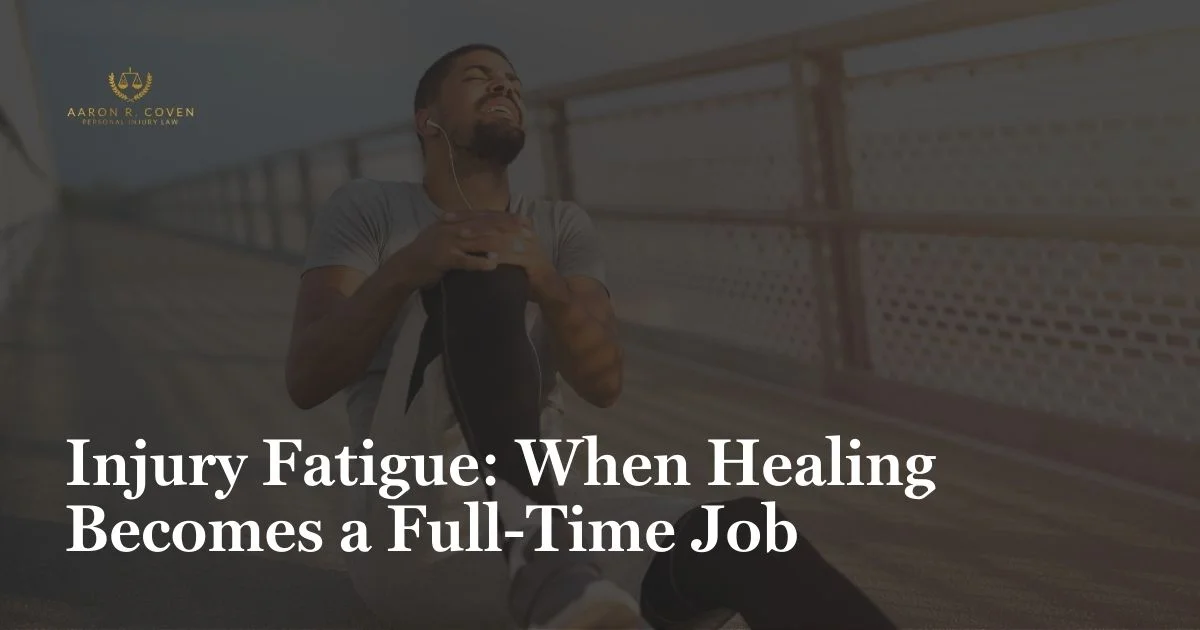
No one prepares you for how consuming recovery can be after an accident.
At first, you think it’ll be temporary. A few appointments. Some rest. A short disruption.
But then healing stretches on.
Suddenly, your life revolves around doctor visits, physical therapy, insurance calls, pain levels, sleep schedules, and constant adjustments. You’re not just recovering, you’re managing recovery.
That exhaustion has a name: injury fatigue. And it’s far more common than people realize.
At Coven Law, we see it every day and we know how deeply it affects both healing and legal outcomes.
What Injury Fatigue Really Looks Like
Injury fatigue isn’t just physical tiredness. It’s the cumulative weight of being injured for too long.
It often shows up as:
Constant exhaustion, even after rest
Frustration with slow or uneven progress
Emotional burnout from appointments and treatment
Feeling disconnected from normal routines
Irritability, sadness, or loss of motivation
Guilt for needing help or accommodations
Many clients tell us, “I’m tired of being injured.” That feeling is real and valid.
Why Recovery Becomes So Draining
Healing after an accident demands more than people expect.
You may be juggling:
Multiple medical providers and treatment plans
Physical therapy schedules
Imaging, follow-ups, and referrals
Missed work or reduced income
Insurance paperwork and phone calls
Ongoing pain that never fully lets up
Meanwhile, life doesn’t pause. Bills still arrive. Kids still need you. Work still expects productivity.
The result is mental and emotional overload layered on top of physical injury.
How Injury Fatigue Affects Healing
When exhaustion sets in, it can slow recovery in subtle but serious ways.
Injury fatigue may lead to:
Skipping or rescheduling appointments
Inconsistent participation in physical therapy
Difficulty advocating for yourself with doctors
Increased pain sensitivity
Delayed emotional recovery
This isn’t a lack of effort. It’s a natural response to prolonged stress and pain.
Unfortunately, insurance companies often misinterpret this fatigue as a lack of commitment to treatment.
Why Injury Fatigue Matters in Personal Injury Claims
Insurance companies don’t see the full picture. They see charts and gaps.
Missed appointments or slowed progress can be used to argue:
Your injuries aren’t that serious
You’re not following medical advice
Your pain has resolved
You’ve reached “maximum improvement”
In reality, injury fatigue is often a sign that the injury has deeply disrupted your life, not that it’s insignificant.
That’s why documentation, communication, and legal guidance matter so much.
What You Can Do If You’re Experiencing Injury Fatigue
If recovery feels overwhelming, you’re not failing, you’re human.
Helpful steps include:
Being honest with your providers about exhaustion or burnout
Asking about modified treatment plans when possible
Keeping notes on how injury impacts daily life
Seeking emotional or mental health support if recommended
Letting your attorney know when recovery feels unmanageable
Healing isn’t linear and it doesn’t have to be endured silently.
Common Missteps That Hurt Exhausted Injury Victims
Pushing through pain to “prove” you’re okay
Stopping treatment without medical guidance
Downplaying symptoms because you’re tired of explaining
Letting insurance pressure rush your recovery
None of these mean you’re weak, but they can make recovery and claims harder than necessary.
How Coven Law Supports Clients Through Long Recoveries
We understand that recovery isn’t just medical. It’s personal.
At Coven Law, we help by:
Building timelines that reflect real-life recovery challenges
Explaining injury fatigue to insurance adjusters
Coordinating documentation across providers
Protecting clients from pressure to settle too soon
Advocating for compensation that reflects the full burden of recovery
Your exhaustion doesn’t disqualify your case. It explains it.